

Rust Livestock Update: How to Farm Cows and Sheep, Sell at the Stables and Use Milk and Wool
Rust's Livestock update adds cows and sheep you can capture, breed and sell. How farming works, milk and cream, wool, the Stables vendor and what else changed.
Rust livestock farming is here. Facepunch's October 2026 update, simply called Livestock, adds cows and sheep that you can capture, keep, breed and sell, plus milk, cream, wool, new fencing and a generator that turns old meat into fuel. Here's how it all works, based on Facepunch's own patch notes.
Rust Livestock update at a glance
| Released | 1 October 2026 (Rust's monthly update) |
| New animals | Cows and sheep (farmable); frogs, rabbits, squirrels, sea turtles, crabs and jellyfish (ambient) |
| What livestock gives | Dung (both), milk (cows), wool (sheep), plus meat, bones and leather |
| Where to sell | The new vendor outside the Stables |
| Other headline changes | Biofuel Generator, livestock fences and gates, repairable Air Wolf helipad, stackable sandbags, new power grid loot rooms |
| Price | £34.99 / $39.99 on Steam (PC) |
How do you farm livestock in Rust?
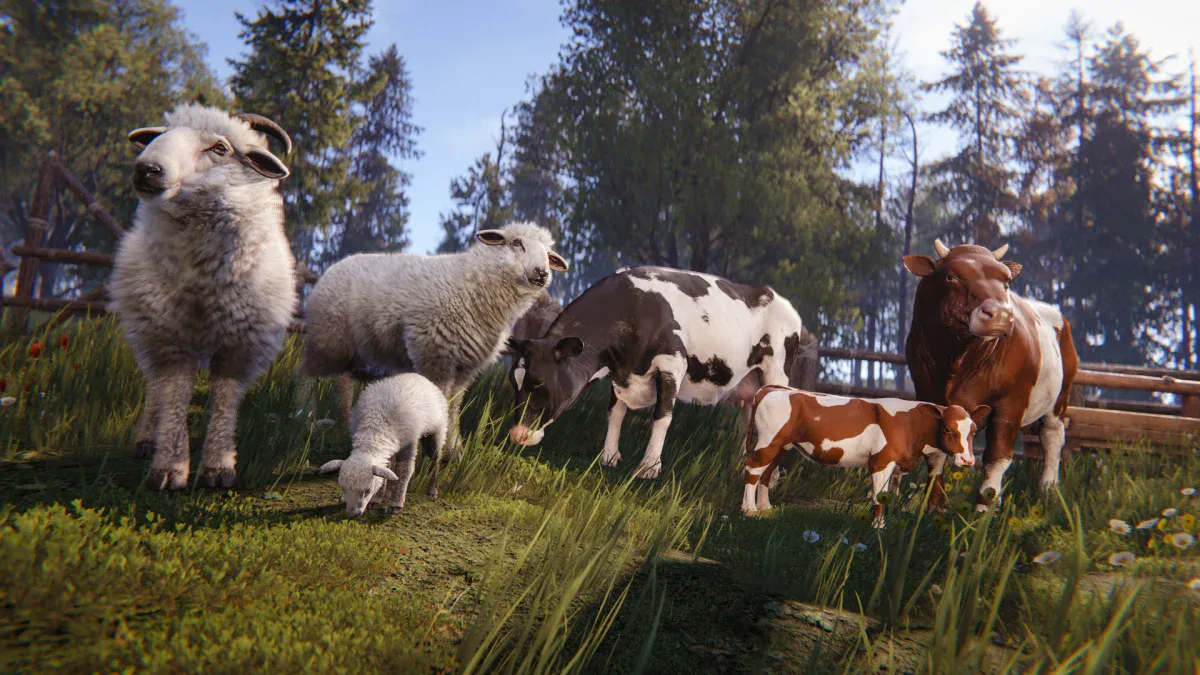
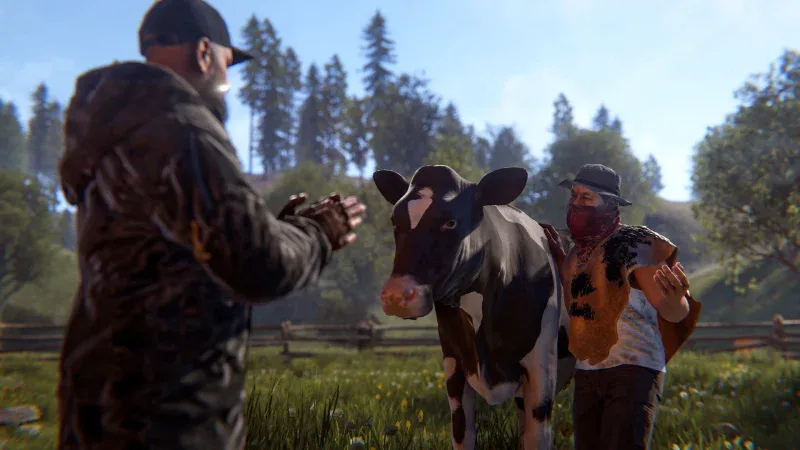
Cows and sheep now roam the island, and you can bring them home. Facepunch says there are "multiple ways to capture wild livestock, some more efficient than others", and that they should all be intuitive, so experiment with luring and herding. On servers using the new navigation system, animals and other NPCs can also walk into player buildings and respect doors opening and closing, which means a barn really can be a barn.
Once you have them, livestock works a lot like Rust's plant farming. Animals have genetics and needs, and you can breed them to chase a perfect "god clone". Facepunch warns that animal genes don't behave exactly like plant genes, though, so the breeding tricks you used for crops won't all carry over.
What do cows and sheep give you?
- Both produce dung, and can still be harvested for meat, bones and leather like any other animal.
- Cows produce milk.
- Sheep produce wool.
How do milk and cream work?
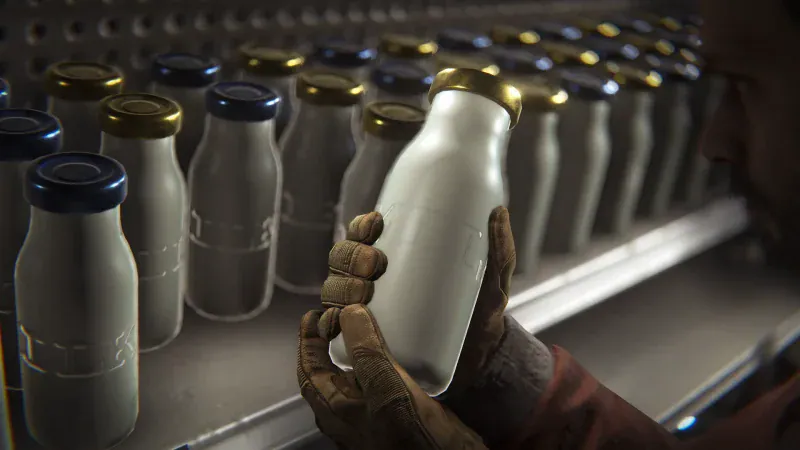
You can drink milk straight away, but if you refrigerate it for 4 hours you unlock a new option to skim it. Skimming gives you Skimmed Milk and Cream, and cream is the more powerful consumable. Both are also used in crafting: milk generally extends the duration of tea effects, while cream boosts their potency.
How do you sell livestock and wool in Rust?
Lead a fully grown cow or sheep to the Stables and talk to the new vendor outside. You'll get a randomised offer based on the animal's gene quality. You can turn it down and ask again twice more, but after the third refusal the vendor gets annoyed and won't buy that animal for 15 minutes.
Wool works the same way, except the offer depends on how much wool you bring in one go, up to a maximum of 400. As Facepunch puts it: high risk, high reward, because you're carrying a lot of valuable wool across the map.
How do you keep livestock safe?
The update adds new animal gates and fence deployables designed to keep livestock penned in. Facepunch describes them as keeping your animals "safe (ish!)", so don't expect them to stop a determined raider.

What is the Biofuel Generator?
Finally, a use for raw or spoiled meat. The Biofuel Generator turns organic matter into low grade fuel, but it has to be stirred by hand. Fill it, stir it and leave it: it runs for about 30 minutes before it needs stirring again, and you can wire up IO to alert you when it does. Foods with more calories produce more low grade.

Will more animals hurt server performance?
Facepunch says not directly. Each frame, the server only processes a share of NPCs up to a fixed time budget, so when the population rises, animals simply react a little more slowly rather than costing the server FPS. The team also says it multithreaded the new navigation system, roughly doubling its performance since the previous patch. The new critters (frogs, rabbits, squirrels, sea turtles, crabs and jellyfish) are mostly decoration for now and are tightly budgeted.
What else changed in the Rust Livestock update?
- Air Wolf helipad must be repaired: at the start of each wipe, the helipad at Bandit Camp is broken and the air vehicle vendor won't sell until players repair it with resources (bash it with a hammer, like building siege weapons). Server admins can turn this off.
- Stackable sandbags: sandbags now have four stages, ending in a pillbox, and are cheaper to craft. They stack to 20, and loot spawns them in fours.
- New power grid loot rooms at monuments including Airfield, Ferry Terminal, both Harbours, Junkyard, Launch Site, Military Tunnels, Nuclear Missile Silo, Radtown, Sewer Branch, Trainyard and Water Treatment Plant. They unlock once enough Heavy Fuses power the Powerplant.
- Heavy fuses last longer on quiet servers: up to four times longer with 10 or fewer players online, scaling back to normal at 100.
- Smoother grenades and C4: client prediction makes throws feel better, especially on high ping.
- A refreshed machete, a new country selection screen, memory savings of around 100MB, and all four ladder hatches are now skinnable in the Workshop.
Watch the Rust Livestock update trailer
What players are saying
Rust remains Very Positive on Steam, with 87% of more than 1.4 million reviews positive. Among recent reviews, M-Force (570 hours) summed up the appeal as an "intense survival experience" that's "fun to farm and have fights", and recommended servers with a limited team size.
When is the next Rust update?
Facepunch releases Rust's big updates monthly, and recent ones have landed on the first Thursday of the month (Livestock arrived on Thursday 1 October). If that pattern holds, the next one is due around Thursday, 5 November 2026, though Facepunch hasn't confirmed the date. We'll update this guide when it does.
More Rust on iGame Magazine
- Rust Naval Update 2026 – is Rust still worth playing this year?
- How to play Rust – the basics for new players
- Rust: from survival simplicity to genre masterpiece
- Rust 2.0 World Update – the last big overhaul
Rust livestock FAQ

David Ware is the Founder and Managing Editor of iGame Magazine. Since 2024 he has built igamemag.com into a trusted online destination for gamers and tech enthusiasts, covering the latest gaming news, in-depth game reviews, hardware and tech breakdowns, and practical guides.
How we write: every article is researched from official sources, such as developer posts, store pages and press releases, then fact-checked and edited by David Ware before it's published. We use AI tools to help with research and drafting.
Related on iGame
 Rust's naval update and whether it's worth playingRust Naval Update 2026 – Is Rust Still Worth Playing This Year?Feb 23, 2026
 Rust basics for new playersHow to Play RustMay 8, 2024
 Rust's last big world updateRust 2.0 World Update Brings Exciting Changes to the Game!Oct 4, 2024
 More GuidesSteam Next Fest October 2026: 8 Survival and FPS Demos Worth Playing Before It EndsOct 21, 2026
 More GuidesBattlefield 6 x Dead Space Event Guide: Dates, Marker Incursion and Every RewardOct 20, 2026
 More GuidesIs Resonance: A Plague Tale Legacy on Game Pass? Price, Editions and PlatformsOct 19, 2026