
Grain Rot Release Date Confirmed: Gameplay, Co-op and Launch Details
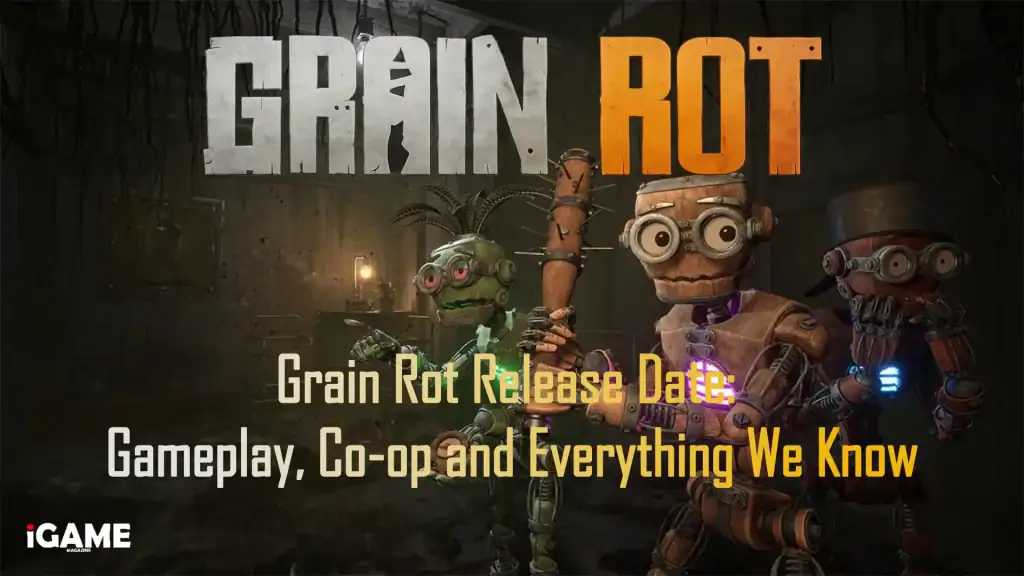
The Grain Rot release date has officially been confirmed, with the unusual co-op extraction horror game arriving on PC on 7 August 2026.
Developed by Beck & Branch Games and published by Neem, Grain Rot combines first-person horror, procedurally changing expeditions, physics-driven chaos and persistent base building. Players descend into dangerous underground ruins, collect anything valuable enough to carry and attempt to return to the surface before their entire group is destroyed.
However, Grain Rot is not simply another title following the recent wave of viral co-op horror games. Its most distinctive mechanic allows players to exist as supernatural Living Sparks capable of possessing fragile wooden bodies known as vessels.
These vessels can splinter, collapse and catch fire. Losing one does not necessarily remove you from the expedition, as your Spark can escape and search the darkness for another body to possess. Combined with destructive environments, unpredictable monsters and a rebuildable Outpost, the system could help Grain Rot become one of 2026’s most interesting smaller releases.
Watch the official Grain Rot trailer
The official Grain Rot trailer introduces the game’s scorched wasteland, unstable wooden vessels and underground Deep Layers. It also demonstrates the mixture of horror, scavenging and chaotic multiplayer interactions that sits at the centre of the experience.

Watch the official Grain Rot trailer for a first look at its strange robotic characters and dark industrial world.
The footage shows players smashing apart furniture, fighting corrupted enemies and escaping through an elevator with whatever resources they can recover. It also highlights how quickly an organised expedition can descend into panic once vessels begin breaking and teammates start interfering with one another.
When is the Grain Rot release date?
The Grain Rot release date is 7 August 2026.
Grain Rot will initially launch for Windows PC through Steam. The Steam store page lists the game as a full release rather than an Early Access launch, and the developers have described the August version as the complete Grain Rot journey with its full 1.0 quest flow.
A price has not yet been displayed on Steam, so players will need to wait for a further announcement or the store page to be updated closer to release.
We will continue updating this guide as the Grain Rot release date draws closer and further details about pricing, launch times and multiplayer support are confirmed.
Grain Rot release information
| Detail | Information |
|---|---|
| Release date | 7 August 2026 |
| Platform | PC |
| PC storefront | Steam |
| Developer | Beck & Branch Games |
| Publisher | Neem |
| Game modes | Single-player and online co-op |
| Genre | Co-op extraction horror and base building |
| Early Access | Not currently listed as Early Access |
| Console release | Not announced |
The developers confirmed the launch date after the game attracted more than 200,000 Steam wishlists. An earlier public demo also passed 60,000 downloads during its initial Steam Next Fest run.
What is Grain Rot?
Grain Rot is a first-person co-op horror extraction builder set in a burnt and hostile wasteland.
Each expedition begins at the Outpost, where players prepare before travelling down into the Deep Layers using a cursed elevator. These underground environments shift between runs and contain resources, furniture, treasures, survivors and hostile Corrupted vessels.
The central objective is to gather useful materials and return to the elevator before the expedition collapses. Anything successfully extracted can then be used to rebuild and improve the Outpost, unlocking upgrades that increase the group’s chances of surviving future descents.
It is a familiar extraction loop at its core:
Enter a dangerous location, gather valuable resources and escape with the loot.
Grain Rot makes that structure more unusual by combining it with physical destruction, body possession and interactive furniture. Rather than simply collecting neatly packaged resources, players can tear fixtures and objects out of the environment, carry them back or feed unwanted items into a Grinder in exchange for gold.
The deeper the group travels, the more dangerous and corrupted the environment becomes. Enemies respond to sound and movement, vessels mutate, voices distort and the expedition becomes increasingly unpredictable.
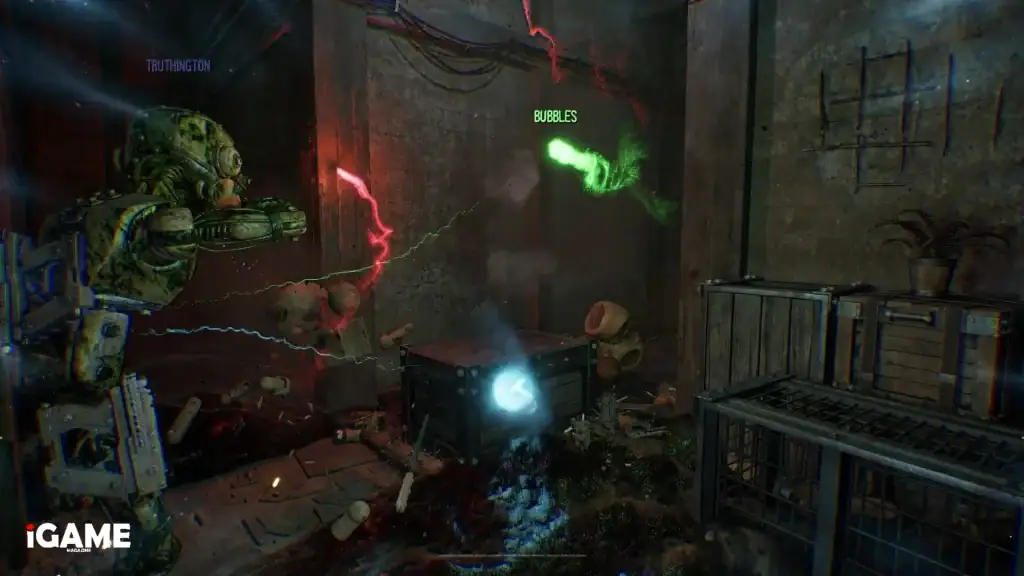
Grain Rot features cooperative gameplay, allowing players to work together while battling hostile robotic enemies.
Grain Rot gameplay explained
The main Grain Rot gameplay loop is built around repeated journeys into procedurally shifting underground ruins.
Players descend from their Outpost, explore the current layer and search for anything that could strengthen their settlement. The team must decide whether to extract safely or risk travelling deeper for more valuable rewards.
Moving deeper appears to increase both the danger and potential rewards. The full release will include new enemies, elite encounters, a boss encounter, legendary gachas, additional biomes and elevator modifiers capable of changing the conditions of a run.
The basic expedition loop involves:
- Preparing at the Outpost.
- Descending through the cursed elevator.
- Exploring the Deep Layers.
- Fighting or avoiding Corrupted vessels.
- Collecting resources, treasures and furniture.
- Finding another host when a vessel is destroyed.
- Returning to the elevator.
- Extracting items and rebuilding the Outpost.
- Unlocking improvements before the next run.
A failed expedition can be costly. If every player’s vessel is broken and the remaining Sparks cannot find new hosts, the collected loot is lost.
This creates an extraction game where survival matters, but death is not always immediate. Players may still have an opportunity to recover after losing their physical body.
Living Sparks and wooden vessels
The Living Spark system is the mechanic that most clearly separates Grain Rot from similar co-op games.
Players do not permanently inhabit a single human character. Instead, they control a supernatural Spark housed inside a fragile wooden vessel.
These vessels can be damaged, smashed apart or burned. Once a vessel is destroyed, the Spark escapes and remains present inside the expedition for a limited period.
As a Spark, the player can guide teammates, explore nearby areas and search for a replacement host. Finding another vessel allows the player to re-enter the action with a different collection of abilities.
The full release will expand this system with dedicated Spark abilities, giving players more options while they are temporarily without a body.
Possessing different vessels could also encourage players to adapt during a run rather than relying on a fixed character build. A replacement body may have abilities better suited to combat, exploration or carrying resources, potentially changing the group’s strategy halfway through an expedition.
The developers describe death as “a change of scenery”, but there is still pressure to recover quickly. A Spark that remains outside a vessel for too long can fade completely.
Co-op chaos is part of the danger
Grain Rot has clearly been designed around groups creating their own problems.
Players can dropkick enemies, interfere with teammates and potentially launch another player’s Spark out of its vessel. Friendly actions can quickly become dangerous when someone blocks a corridor, attracts a monster or causes chaos near an extraction point.
The physics system means that many of these moments may not be scripted. Carrying large objects through tight spaces, destroying furniture and fighting inside unstable environments should create unexpected situations naturally.
This gives Grain Rot a combination of genuine horror and slapstick multiplayer chaos similar to games such as Lethal Company and R.E.P.O. The difference is that its persistent building and possession systems appear considerably more involved.
Playing cooperatively should make resource collection and combat easier, but unreliable teammates could become almost as dangerous as the Corrupted.
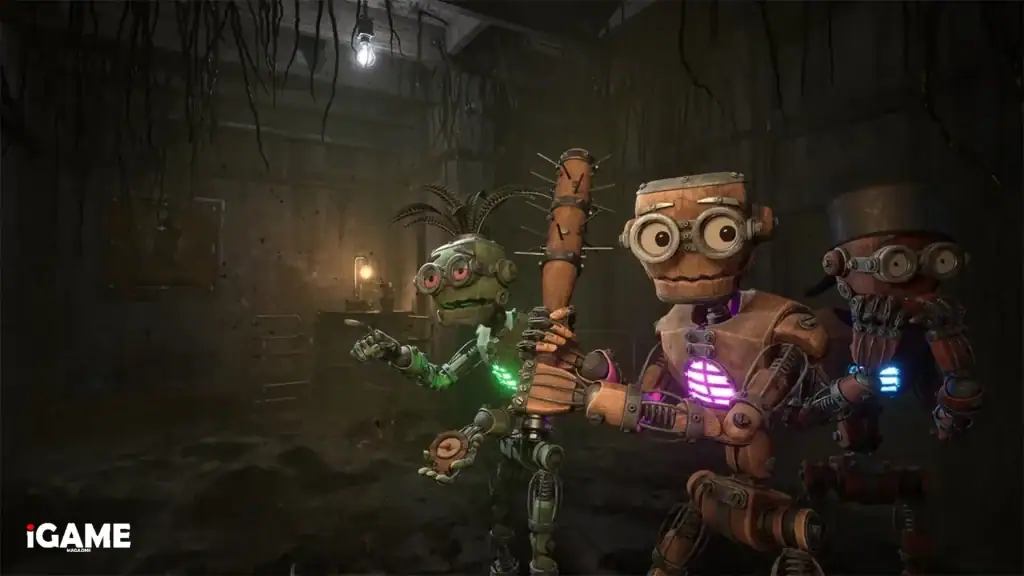
Players explore abandoned environments, solve puzzles and uncover the mysteries hidden throughout Grain Rot's atmospheric world.
What are the Deep Layers?
The Deep Layers are the procedurally shifting underground environments explored during Grain Rot expeditions.
They contain Corrupted vessels, resources, trapped survivors and items required to rebuild the Outpost. The layout and threats can change, preventing players from relying entirely on memorised routes.
Enemies are designed to react to sound, movement and one another. This could produce more dynamic encounters than a simple patrol system, particularly when several creatures are drawn into the same area.
Corruption also becomes more severe as players descend. Bodies warp, voices change and vessels can develop mutations.
The full release will add two new biomes accompanied by new ambient music. It will also introduce new enemies, elite encounters and a boss encounter, providing considerably more variety than the original public demo.
Outpost building and permanent progression
Successfully escaping the Deep Layers is only part of the Grain Rot gameplay loop.
Everything brought back from an expedition contributes to rebuilding the group’s Outpost. This persistent settlement acts as the game’s central hub and provides long-term progression between individual runs.
Players will be able to unlock:
- Interactive furniture
- Character stat upgrades
- New constructs
- Rescued survivors
- Additional Outpost facilities
- Equipment enhancement options
- New ways to prepare for expeditions
The complete game will include a second Outpost floor, more constructs, additional NPCs and machines used for enchanting and repairing items.
This gives recovered furniture and resources a purpose beyond increasing a simple currency total. The objects players remove from the Deep Layers can visibly change and expand the settlement.
A stronger Outpost should allow groups to travel farther and survive increasingly dangerous layers, creating a steady cycle of exploration, extraction and construction.
Tactical carpentry and interactive furniture
One of Grain Rot’s strangest advertised features is “tactical carpentry”.
Furniture is not purely decorative. Players can remove objects from the environment, carry them through the ruins and use them in practical ways.
A large item might provide temporary cover, block a doorway or alter how enemies move through an area. Objects can also become obstacles when teammates attempt to drag them through narrow corridors during an escape.
Unwanted furniture can be placed inside the Grinder and converted into gold. More valuable objects can instead be returned to the Outpost and used as part of its development.
This physical approach to collecting loot could make even ordinary objects meaningful. A chair or cabinet may not sound exciting when listed as an item, but physically transporting it through a monster-infested ruin creates a completely different challenge.
What is coming in the full Grain Rot release?
Beck & Branch Games has outlined many of the additions planned for the full version launching on 7 August. These additions should ensure the Grain Rot release date delivers a considerably larger and more polished experience than the earlier public demo.
The confirmed launch content includes:
- New enemies
- A boss encounter
- Elite encounters
- Legendary gachas
- New items
- Elevator modifiers
- New Outpost NPCs
- A complete version 1.0 quest flow
- Two additional biomes
- Spark abilities
- Player levelling
- New hats and cosmetics
- An enchantment and repair machine
- A second Outpost floor
- More constructs
- Expanded extraction options
- Gamepad support
- Additional settings
- Difficulty balancing
- Performance optimisation
Players will also be able to extract vessels, treasures and items inside the elevator, widening the selection of rewards that can be carried back from an expedition.
The team has said that it has been using demo feedback to rebalance the experience, particularly for solo players and smaller groups.
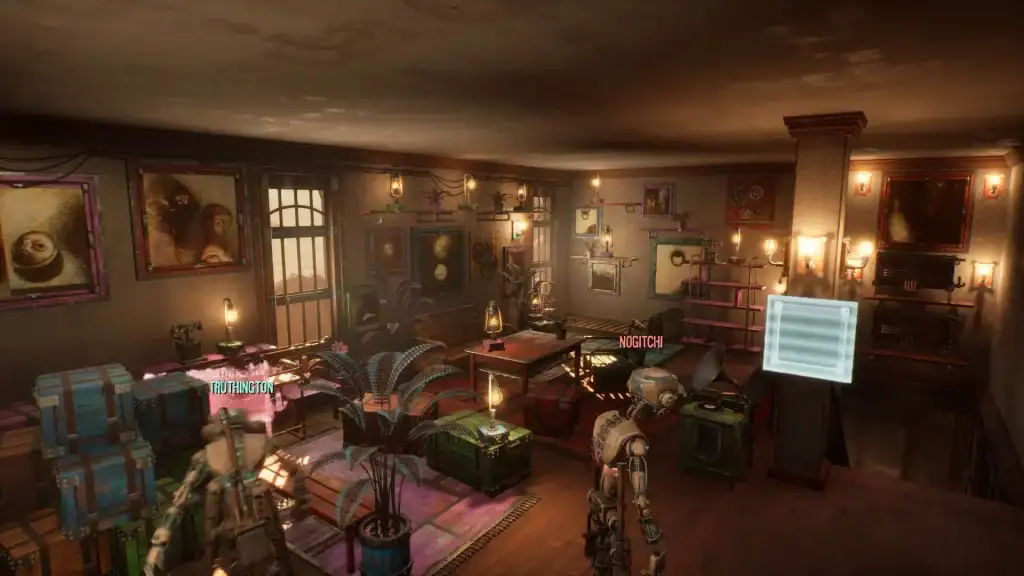
The safehouse gives players a place to regroup, customise their robots and prepare for the next cooperative adventure in Grain Rot.
Can Grain Rot be played solo?
Yes. The Steam page lists Grain Rot as supporting single-player as well as online co-op.
However, the game’s mechanics and marketing place considerable emphasis on playing with friends. Managing enemies, carrying furniture and recovering teammates will likely be easier with a coordinated group.
Solo balancing was one of the subjects raised by players following the public demo. The developers acknowledged that the game should remain tense and challenging without becoming unnecessarily punishing for individuals or smaller teams.
Difficulty balancing is included among the improvements planned for launch, suggesting that the single-player experience should be adjusted before the final release.
How many players does Grain Rot support?
The Steam page confirms online co-op but does not currently state a specific maximum player count in its listed features.
Promotional footage regularly shows groups exploring together, but until the developer publishes a firm lobby limit, it would be safest not to treat an unofficial player count as confirmed.
We will update this section when Beck & Branch Games provides final multiplayer details.
Will Grain Rot have controller support?
Gamepad support is confirmed as one of the features being prepared for the full Grain Rot release.
The public demo may not represent the final controller experience, as the developer specifically included gamepad support in its launch-content announcement.
Grain Rot will also receive expanded gameplay, audio and video settings alongside performance improvements.
Is the Grain Rot demo still available?
A standalone Grain Rot demo was released through Steam in June 2026 and passed 60,000 downloads during its initial availability.
The developers originally said it would remain available until the end of Steam Next Fest on 22 June. Its current availability may change as the full launch approaches, so players should check the separate demo page on Steam rather than assuming it remains permanently downloadable.
The demo page is available here:
https://store.steampowered.com/app/4731790/GRAIN_ROT_Demo/
Grain Rot PC system requirements
Grain Rot’s minimum system requirements are relatively accessible for a modern co-op game.
Minimum requirements
| Component | Minimum specification |
|---|---|
| Operating system | Windows 10 64-bit |
| Processor | Intel Core i5-4590 or AMD Ryzen 5 2600 |
| Memory | 8 GB RAM |
| Graphics | NVIDIA GTX 970 or AMD Radeon R9 390 |
| DirectX | Version 11 |
| Storage | 10 GB available space |
| Network | Broadband internet connection |
Recommended requirements
| Component | Recommended specification |
|---|---|
| Operating system | Windows 10 64-bit |
| Processor | Intel Core i5-10600 or AMD Ryzen 5 3600 |
| Memory | 8 GB RAM |
| Graphics | NVIDIA RTX 2060 or AMD Radeon RX 5700 |
| DirectX | Version 11 |
| Storage | 10 GB available space |
| Network | Broadband internet connection |
These specifications may still be revised before release, particularly as performance optimisation remains part of the developer’s launch work.
Is Grain Rot coming to PS5 or Xbox?
No Grain Rot console release has been announced.
The game is currently confirmed only for Windows PC through Steam. There are no official PlayStation 5, Xbox Series X|S or Nintendo Switch 2 versions listed.
Gamepad support could make a future console adaptation easier, but it should not be treated as evidence that one is already in development.
For now, console players will need to wait for an announcement from Beck & Branch Games or publisher Neem.
Who is developing Grain Rot?
Grain Rot is being developed by Beck & Branch Games and published by Neem.
The developers have referred to themselves as a small independent team and have remained active in Steam announcements following the release of the public demo.
Community feedback has already influenced difficulty balancing, bug fixes, settings and performance work ahead of launch. The studio has also suggested that it has ideas for post-launch content, although a formal roadmap has not yet been revealed.
Grain Rot’s use of generative AI
The Steam store page includes an AI-generated content disclosure.
According to the developer, generative AI is used for the voice-over of a small number of in-game characters. No further use is specified in the disclosure currently displayed on Steam.
This has prompted criticism from some members of the Steam community. Players for whom the use of generative AI is an important purchasing consideration should review the current disclosure before release, as the information may be updated by the developer.
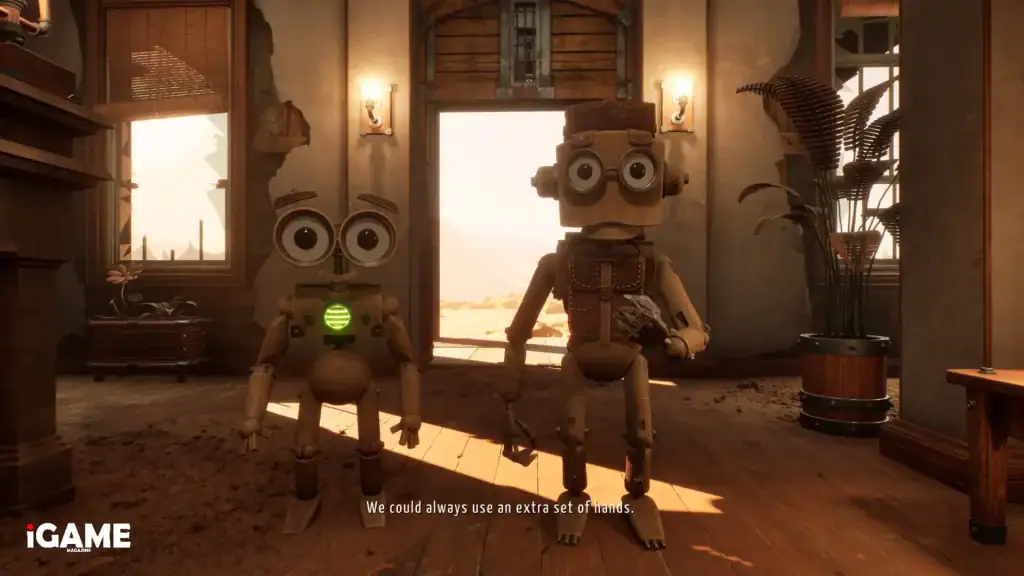
Players encounter a cast of unique robot companions as they uncover the story behind the mysterious world of Grain Rot.
Could Grain Rot become the next major co-op horror game?
Grain Rot enters a busy genre, but it has several mechanics that could help it stand out.
The Living Spark system provides players with a second chance after losing their bodies, while the persistent Outpost gives each expedition a longer-term purpose. Furniture destruction, physical object transportation and tactical carpentry should also create plenty of unpredictable multiplayer moments.
Its rapid wishlist growth suggests that the concept has already caught players’ attention. The game passed 100,000 wishlists within weeks of its announcement, before the developers later celebrated 200,000 supporters while confirming the release date.
A successful launch will depend on variety, performance and whether progression remains rewarding after the initial novelty fades. The addition of more biomes, enemies, encounters and Outpost facilities should give the full game substantially more depth than the demo.
Grain Rot may not have the profile of a major AAA release, but its distinctive mechanics and chaotic co-op potential make it a title worth watching closely.
Final thoughts
The Grain Rot release date is approaching quickly, and the game has already developed considerable momentum ahead of its Steam launch on 7 August 2026.
Its combination of extraction horror, base building and supernatural body possession offers something noticeably different from many other co-op releases. Living Sparks allow players to remain involved after their vessels are destroyed, while the Outpost provides permanent progression and a reason to continue descending into increasingly dangerous layers.
There are still unanswered questions surrounding its price, final multiplayer limit and long-term post-launch plans. However, the confirmed launch additions suggest that the complete game will offer much more content than its successful public demo.
Players interested in physics-driven co-op horror can add Grain Rot to their Steam wishlist now and prepare to enter the Deep Layers when the game launches in August.
Useful links
Related Articles
Enjoyed this article? Share it with your friends on social media and spread the word!